Plant Compression Strength Tester Explained: A UK Buyer's Guide
Key Takeaways
- A plant compression strength tester measures how much force a stem, stalk or plant sample can withstand before deforming, bending excessively or failing.
- For UK growers, breeders, agronomists and researchers, consistent stem strength data supports crop selection, lodging risk assessment and quality control.
- A 50N force gauge test stand is well suited to many plant stem and stalk strength testing tasks because it offers controlled, repeatable force application.
- Buying the right plant compression strength tester depends on sample type, required force range, repeatability, ease of use, data recording and after-sales support.
- NottiTikTok’s specialist solution is designed specifically for crop stalk strength testing, combining practical usability with focused measurement capability.
Plant Compression Strength Tester Explained: A UK Buyer’s Guide
Stem failure in the field is expensive. Once crops lodge, bend or weaken under weather pressure, harvesting becomes harder, quality can drop, and yield potential is put at risk. That is why demand has grown for reliable, repeatable equipment that can quantify stem and stalk strength instead of relying on visual judgement alone. A plant compression strength tester gives growers and technical teams a practical way to measure structural performance and compare samples with confidence.
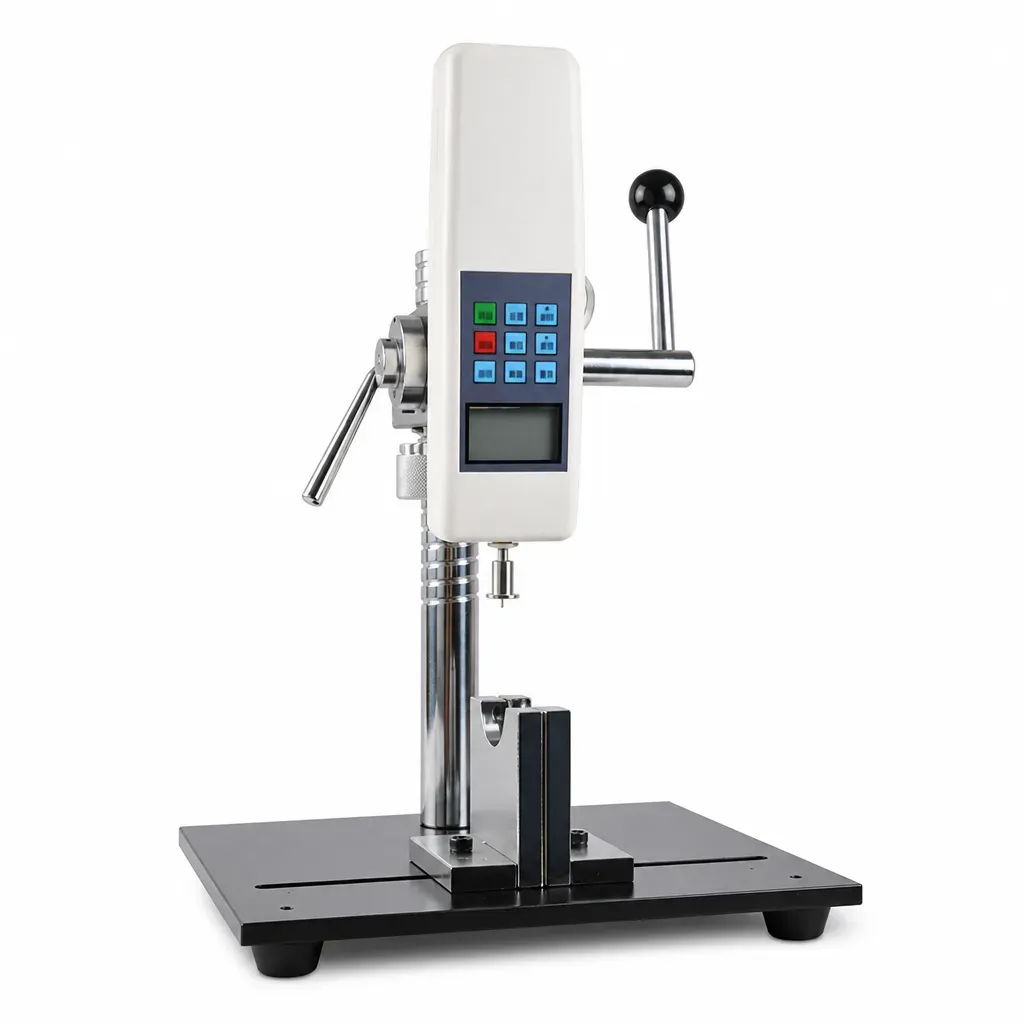
At NottiTikTok, the focus is narrow and deliberate: Plant Stem Strength Tester for Crop Stalk Strength Testing. The product is built as a specialist stem bending force tester and plant compression strength tester with a 50N force gauge test stand, intended for users who need actionable data rather than generic lab equipment. That matters in real UK growing conditions, where decisions around variety selection, crop management and harvest timing need dependable evidence.
This guide explains what a plant compression strength tester does, why it matters, what features to look for, and how UK buyers can choose the right system for field, glasshouse or research use.
What Is a Plant Compression Strength Tester?
A plant compression strength tester is an instrument used to apply force to a plant sample, usually a stem or stalk, and record how that sample responds under load. Depending on the setup, it can be used to assess resistance to compression, deformation, bending or failure. In practical agricultural use, the aim is not simply to produce a force number. The aim is to understand stem robustness in a way that supports crop performance decisions.
For many UK users, the relevant test is straightforward: place the stem or stalk in the fixture, apply force at a controlled rate, and record the force required to reach a defined event such as bending, crushing or break point. When that process is repeatable, comparisons become meaningful across varieties, treatment groups, growth stages or environmental conditions.
This is especially useful for cereal crops, brassicas, energy crops and other plants where stem integrity plays a direct role in standability and handling. Rather than relying on subjective descriptions such as “strong” or “weak”, a plant compression strength tester turns physical behaviour into measurable data.
Why Plant Stem and Stalk Strength Testing Matters in the UK
UK agriculture operates under highly variable conditions. Rainfall, wind exposure, soil variability and seasonal disease pressure can all affect stem development and structural stability. In these conditions, measuring stalk strength is not a niche exercise. It has practical value for growers, plant breeders, agronomists, universities and technical product teams.
Reducing Lodging Risk
Lodging remains one of the clearest reasons to test stem strength. When stems fail, crops can lean or collapse, causing difficulties with light interception, disease management and combine harvesting. The Agriculture and Horticulture Development Board (AHDB) has long identified lodging as a major cause of yield and quality loss in UK cereals, particularly where crop height, nutrition and seasonal weather interact unfavourably. A measurement-based approach helps users identify weaker material earlier.
Supporting Research and Breeding
In breeding programmes and trial work, objective force data makes it easier to compare candidate lines under controlled conditions. A plant compression strength tester can help distinguish small but important differences between stems that may not be obvious on visual inspection alone. That makes it useful for selecting more resilient material and documenting results with greater scientific rigour.
Improving Consistency in Technical Assessments
Manual handling tests vary from person to person. Instrumented testing reduces operator subjectivity. That is important whether work is being carried out in a university lab, by an agronomy team, or in a commercial setting where internal quality procedures need traceable results.
There is also a wider safety and ergonomics context. The UK Health and Safety Executive reports that 17% of all working days lost due to work-related ill health in 2023/24 were caused by musculoskeletal disorders, based on Labour Force Survey estimates (source: HSE). While that statistic is not specific to crop testing, it underlines the value of replacing improvised force application with controlled bench testing where practical. Equipment that standardises testing can reduce repeated manual strain and improve repeatability at the same time.
How a Plant Compression Strength Tester Works
The basic principle is simple: a controlled force is applied to a plant sample, and the force reading is measured as the sample resists that load. The practical quality of the result depends on how controlled the test setup is.
Force Application
In a specialist tester with a 50N force gauge test stand, the operator can apply load in a stable, repeatable way. This is a major advantage over hand-applied pressure, where speed, angle and contact position can vary significantly between tests.
Sample Positioning
Plant samples are naturally variable. Diameter, moisture content, internode length and surface texture all affect results. A good tester helps position the sample consistently so that force is applied at the intended point and orientation.
Measurement and Recording
The force gauge displays the load value, allowing the user to identify peak force, failure force or resistance at a particular deformation point depending on the protocol being followed. In a disciplined testing workflow, each reading is recorded alongside sample identity, crop type, growth stage and environmental conditions.
Repeatability
The real strength of a proper plant compression strength tester lies in repeatability. If the same sample type can be tested multiple times under the same setup, the resulting data becomes more credible and more useful for making decisions.
What the 50N Force Gauge Test Stand Means for Buyers
The phrase 50N force gauge test stand is important because it tells you a great deal about the intended use of the equipment. In many plant stem and stalk applications, a 50-newton range offers a practical balance: sensitive enough for lighter botanical samples, but robust enough for meaningful resistance testing across a range of crop stems.
For buyers, this matters for three reasons. First, force range affects resolution and control. Second, it influences the kind of crops and stem structures you can test effectively. Third, it determines whether you are buying a fit-for-purpose plant instrument or a generic force testing tool that may not align with your day-to-day work.
When buyers assess plant testing equipment, the best results usually come from matching the force range and fixture design to the biological sample, rather than buying on headline specification alone.
NottiTikTok’s positioning is clear here: this is a specialist system for crop stalk strength testing, not a broad, unfocused instrument catalogue item. For users who need stem bending force and compression testing in one practical setup, that specialist design is a genuine advantage.
Who Should Use a Plant Compression Strength Tester?
A plant compression strength tester is relevant to several types of UK buyer, each with slightly different priorities.
Commercial Growers
Growers may use testing to compare varieties, monitor crop robustness, or support decisions around nutrition and plant growth regulation. Where lodging risk is commercially significant, hard data can be more useful than field impressions alone.
Agronomists and Crop Consultants
Independent and in-house advisers can use stem strength data to support recommendations and document crop condition more clearly. It can also help when comparing treatment outcomes across trial strips or larger replicated programmes.
Plant Breeders and Researchers
Breeding stations, universities and research groups need repeatable methods that stand up to scrutiny. Equipment that allows consistent sample loading and clear force readings is particularly valuable in these settings.
Education and Technical Training Providers
Colleges and specialist training settings can use a plant compression strength tester to demonstrate measurable plant biomechanics in a way that is easier for learners to understand than abstract theory alone.
What to Look for When Buying a Plant Compression Strength Tester
Not all force testing equipment is equally suitable for plant work. UK buyers should assess the instrument against the practical realities of biological samples, not just the specification sheet.
1. Suitability for Plant Stems and Crop Stalks
The first question is simple: was it designed with plant samples in mind? Stems are irregular, moisture-sensitive and structurally variable. A dedicated tester for crop stalk strength testing is generally more useful than a generic industrial force stand.
2. Appropriate Force Range
A 50N system is often a strong fit for plant stem testing because it provides usable sensitivity across many crop applications. Buyers should still consider the expected resistance of their specific samples.
3. Repeatable Test Stand Operation
Consistency of movement and force application is central to good results. A proper test stand gives more dependable data than manual pushing or improvised bench setups.
4. Clear Force Readings
Readability matters. The easier it is to capture peak or failure force accurately, the easier it becomes to build a credible dataset.
5. Practical Setup Time
If sample loading is awkward or slow, testing throughput suffers. Buyers should look for equipment that can be used efficiently in routine work, especially during busy trial or harvest periods.
6. Support from a UK-Focused Supplier
Support, delivery expectations and communication standards matter. A UK ecommerce buyer generally benefits from dealing with a supplier that understands local use cases, expectations and operational timelines.
How to Compare Plant Compression Strength Tester Results Properly
Buying the right tester is only part of the job. Useful results depend on a repeatable testing method. Even a high-quality instrument can produce misleading conclusions if the protocol is inconsistent.
Keep Sample Conditions as Consistent as Possible
Moisture content, time since cutting, sample length and test location on the stem all influence readings. Establish a standard protocol before comparing results.
Test Enough Replicates
Biological variation is normal. A single reading rarely tells the full story. Multiple replicates reduce the risk of over-interpreting an outlier.
Record Context Alongside Force Data
Force values mean more when linked to crop variety, growth stage, treatment, site conditions and sampling date. In research and commercial trials alike, context is what turns numbers into decisions.
Use the Same Fixture and Loading Method
Any change in contact point, sample orientation or loading speed can alter the result. Buyers choosing a dedicated plant compression strength tester are often doing so because they want to eliminate precisely this kind of inconsistency.
Common Buying Mistakes to Avoid
Choosing a generic force tester without considering plant-specific use. A broad industrial device may look suitable on paper but prove awkward for stem and stalk samples.
Focusing only on maximum force capacity. Bigger is not automatically better. Sensitivity and control are often more important for plant work.
Ignoring workflow. If the tester is cumbersome to set up, routine use tends to fall away.
Testing without a standard method. Even the right equipment cannot rescue inconsistent sample preparation.
Buying without checking supplier credibility. A specialist supplier with a clear product focus is usually better placed to support a niche testing requirement.
Why Buyers Choose a Specialist Plant Stem Strength Tester
There is a clear difference between equipment that can technically apply force and equipment designed around the realities of crop testing. Buyers looking for a plant compression strength tester are often trying to solve a specific problem: they need dependable stem strength measurements that can be repeated, compared and trusted.
NottiTikTok’s product narrative aligns directly with that requirement. The system is presented as a Plant Stem Strength Tester for Crop Stalk Strength Testing, with the added clarity of being a specialist stem bending force tester and plant compression strength tester with 50N force gauge test stand. That specificity is useful. It tells buyers what the instrument is for, what kind of testing it supports, and why it belongs in a crop assessment workflow.
For procurement teams, technical leads and researchers, that focus also supports trust. Specialist tools usually create fewer compromises than generic alternatives, especially where sample handling and repeatability are central to the task.
CTA: View the NottiTikTok Plant Compression Strength Tester
If you need a practical, specialist solution for crop stalk strength testing, NottiTikTok offers a focused product built around the real demands of stem measurement work. The combination of stem bending force testing and plant compression testing, paired with a 50N force gauge test stand, makes it a strong fit for growers, agronomists, breeders and research users who need reliable data.
View the NottiTikTok plant compression strength tester and product details.
Frequently Asked Questions
What does a plant compression strength tester measure?
It measures the force a plant stem, stalk or similar sample can withstand under a controlled load. Depending on the method used, this may include compression resistance, bending response or failure force.
Is a 50N force gauge enough for crop stalk strength testing?
For many plant stem applications, a 50N force gauge is an appropriate and practical range because it balances sensitivity with sufficient testing capacity. The exact suitability depends on the crop type and the resistance of the samples being tested.
Who typically buys a plant compression strength tester in the UK?
Typical buyers include commercial growers, agronomists, plant breeders, universities, research organisations and technical teams involved in crop trials or plant performance assessment.
Why choose a specialist plant compression strength tester instead of a general force tester?
A specialist tester is more likely to suit the shape, variability and handling needs of plant samples. That usually means easier setup, better repeatability and results that are more useful for crop-focused decision-making.
Ready to try NottiTikTok?
Shop Now — £1051.00