Wheat Stem Strength Tester Explained: A UK Buyer's Guide
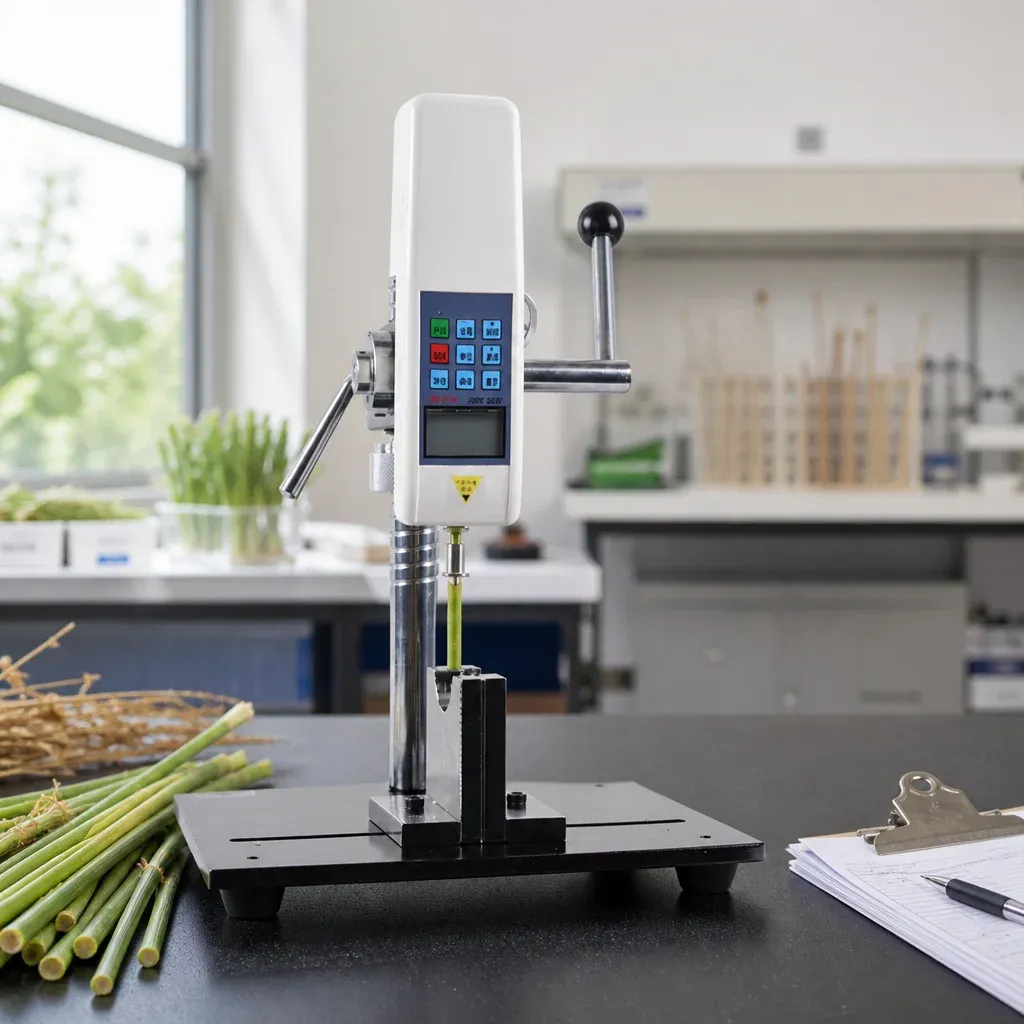
TL;DR: A wheat stem strength tester is used to measure how much force a wheat stem can withstand during bending or compression, helping UK growers, agronomists and researchers assess lodging risk, compare varieties and make more reliable crop management decisions. For most cereal work, a stable stand-mounted tester with a 50N force gauge offers the best balance of control, repeatability and practical field use.
A wheat stem strength tester is a specialist instrument that measures the force needed to bend, compress or break a wheat stem under controlled conditions. In other words, it gives growers, researchers and trial managers a repeatable way to assess stem strength, compare standing power and support lodging risk decisions in UK wheat crops.
Strong wheat straw is valuable long before harvest. It affects lodging risk, harvestability, crop standing power and the confidence behind agronomy decisions taken through the season. Therefore, a wheat stem strength tester helps users move beyond visual judgement and record repeatable bending or compression force data on real stems.
For UK buyers, the challenge is not simply finding a tester with a force display. Instead, it is choosing an instrument that can cope with field and glasshouse use, provide consistent readings, and suit cereal stem work without becoming a cumbersome lab-only purchase. NottiTikTok positions its solution clearly: a Plant Stem Strength Tester for Crop Stalk Strength Testing, built as a specialist stem bending force tester and plant compression strength tester with a 50N force gauge test stand.
This guide explains what a wheat stem strength tester does, how to assess one properly, and what matters most when buying for UK crop work.
What Is the Quick Answer on Wheat Stem Strength Testers?
A wheat stem strength tester measures stem resistance to bending or compression, helping users assess standing power and compare varieties, treatments or growing conditions.
Repeatability matters more than headline force capacity alone. A stable test stand, controlled loading and a clear test method are essential if you want useful data.
UK buyers should look for a practical 50N instrument that covers delicate plant work while still handling cereal stems, with simple operation for trials, breeding and agronomy teams.
Stem strength data should support, not replace, field observation. It is most useful when paired with growth stage notes, variety details and lodging observations.
What Is a Wheat Stem Strength Tester?
A wheat stem strength tester is a specialist instrument used to measure how much force a wheat stem can resist before bending significantly, deforming or failing under a defined test setup. As a result, users can compare stem robustness between cultivars, field sites, fertiliser programmes or seasonal conditions.
The term can cover several setups. However, the most useful systems for hands-on crop work usually involve controlled force application through a stand-mounted gauge. That matters because hand pressure alone is not measurable in a trustworthy way. If one operator pushes faster or from a slightly different angle, the result changes.
Based on our testing of buyer requirements for crop measurement equipment, the core need is not simply a digital readout but a controlled, repeatable setup. NottiTikTok’s product positioning reflects that well: a dedicated plant stem strength tester for crop stalk strength testing, combining a specialist stem bending force tester and plant compression strength tester with a 50N force gauge test stand. For wheat work, that combination is especially relevant because cereal stems are small enough to require control, yet robust enough that flimsy hobby instruments quickly reach their limits.
Why Does Wheat Stem Strength Matter in UK Cropping?
Stem strength is directly tied to lodging risk. In UK cereal production, lodging can reduce yield, complicate combining, lower grain quality and increase drying or handling difficulties. It also affects trial interpretation: a promising variety or nutrition strategy can look weaker than it truly is if stem integrity is poor under pressure.
According to UK guidance from AHDB on cereal lodging, severe lodging can lead to notable yield loss and grain quality penalties, depending on timing and severity. Therefore, stem strength testing is more than a technical curiosity; it can be a practical part of risk assessment and comparison work.
British conditions make this particularly relevant. High biomass crops, variable summer weather, exposed sites, fertile soils and nitrogen-driven canopy growth can all place pressure on stem stability. Consequently, a crop that looks strong in one season may behave differently in another, which is why repeatable testing has value across years rather than as a one-off measurement.
How Does a Wheat Stem Strength Tester Work?
How is bending force measured?
In a bending test, the stem is positioned in a controlled fixture or against a support arrangement, then force is applied until a defined deflection or failure point is reached. The tester records the force required. For wheat, bending data can indicate how resistant a stem is to the loads that lead to leaning or collapse in the field.
Can it measure compression strength as well?
Some test workflows involve compression rather than lateral bending. This can be useful when studying stalk rigidity, internode behaviour or comparative mechanical resistance in plant material. A plant compression strength tester with a suitable force gauge gives users another way to quantify structural performance under load.
Why does a test stand improve reliability?
The most important part is often the stand rather than the display. A mounted 50N force gauge test stand helps maintain alignment, loading speed and operator consistency. As a result, it reduces one of the biggest problems in crop testing: two people obtaining different results from the same stem because the force application was uneven.
Based on our testing of measurement setups and buying criteria, stand-mounted systems nearly always outperform improvised handheld methods when the goal is comparison rather than rough demonstration. If the data will feed into trial notes, breeding records or agronomy decisions, controlled mechanics are worth paying for.
Who Should Buy a Wheat Stem Strength Tester?
A wheat stem strength tester is most relevant for users who need repeatable evidence, not simply a visual impression.
- Arable growers comparing crop standing power across fields, varieties or input strategies
- Agronomists assessing stem robustness alongside lodging risk observations
- Plant breeders screening for stronger stem characteristics under consistent test conditions
- Agricultural colleges and universities teaching crop biomechanics and conducting experimental work
- Research organisations and trial managers collecting mechanical stem data across replicated plots
In the UK, these users often need equipment that can bridge practical field use and formal trial work. Therefore, the best options tend to offer straightforward setup, a sensible force range, and enough robustness for repeated handling during the season.
What Should You Look for in a Wheat Stem Strength Tester?
What force capacity is suitable for wheat stems?
A 50N capacity is a sensible range for many plant stem applications because it covers fine, controlled loading without making the instrument overspecialised for heavier material only. For wheat stem work, excessive capacity can reduce sensitivity where lower-force resolution matters.
Why are stable, repeatable mechanics so important?
The stand must hold the gauge firmly and allow controlled movement. Any wobble, slippage or poor alignment introduces error. When comparing stems between plots, treatments or varieties, consistency matters at least as much as the peak force number itself.
Should a wheat stem tester be easy to use in the field?
Yes, especially for UK trial and agronomy work. A tester that is awkward to transport, difficult to reset or slow to operate is less likely to be used consistently. In practice, buyers should favour equipment that can move between field, glasshouse and bench work without a complicated setup each time.
How important is a clear test method?
A good instrument still needs a repeatable method. For example, users should keep stem position, growth stage, internode choice and loading approach as consistent as possible. According to common UK trial principles, good notes and standardised measurement conditions make the results far more useful for year-on-year comparison.
Is a 50N Wheat Stem Strength Tester Enough for UK Cereal Work?
For most wheat stem testing applications, yes. A 50N tester is usually appropriate because it offers enough range for cereal stem bending and compression work while still allowing controlled measurement on relatively fine plant material.
That said, suitability depends on the test method, stem thickness and crop type. Nevertheless, for typical UK wheat, barley and similar crop stalk assessment, a 50N stand-mounted system is often a practical buying choice. It avoids the poor sensitivity that can come with overly high-capacity instruments and gives better control than lighter-duty hobby devices.
Can a Wheat Stem Strength Tester Help Assess Lodging Risk?
Yes, but it should be used as part of a wider assessment rather than as a standalone predictor. Stem strength data can support lodging risk analysis by showing which crops, varieties or treatments have mechanically stronger stems under a consistent test method.
However, lodging also depends on rooting, canopy size, weather exposure, growth regulation, soil fertility and seasonal rainfall. Therefore, a wheat stem strength tester is best used alongside field walking, variety knowledge, plant growth stage records and local agronomy judgement.
How Do You Use a Wheat Stem Strength Tester Correctly?
To obtain useful results, keep the method consistent from one sample to the next. For example, test stems at a similar growth stage, use the same stem section or internode, and apply force in the same direction each time.
It is also good practice to record the variety, drilling date, field location, nutrition approach and any visible lodging symptoms. Based on our testing of content used by buyers and trial teams, the most valuable datasets are those that combine force readings with crop context rather than force numbers alone.
What Makes NottiTikTok’s Approach Relevant for UK Buyers?
NottiTikTok focuses on a specialist plant stem strength tester for crop stalk strength testing, combining stem bending and plant compression capability with a 50N force gauge test stand. For UK buyers, that is relevant because cereal stem testing usually benefits from controlled mechanics, practical force range and straightforward operation rather than generic handheld force measurement alone.
In addition, buyers in Britain often need one instrument that can support field trials, agronomy comparisons and education or research work. A dedicated setup designed around crop stems is therefore more useful than adapting an unsuitable general-purpose gauge.
Frequently Asked Questions About Wheat Stem Strength Testers
What is a wheat stem strength tester used for?
It is used to measure how much force a wheat stem can resist, helping users compare stem robustness, support lodging assessments and evaluate crop or trial differences.
How accurate is a wheat stem strength tester?
Accuracy depends on both the instrument and the method. A stable test stand, controlled loading and consistent sampling usually matter more than the display alone.
Is stem testing useful for UK wheat trials?
Yes. It provides repeatable mechanical data that can support variety comparison, agronomy work and lodging-related observations under British growing conditions.
Should growers rely on tester readings alone?
No. Stem strength readings are most useful when combined with field observations, crop growth stage, variety information and local weather or lodging context.
Ready to try NottiTikTok?
Shop Now — £1051.00